


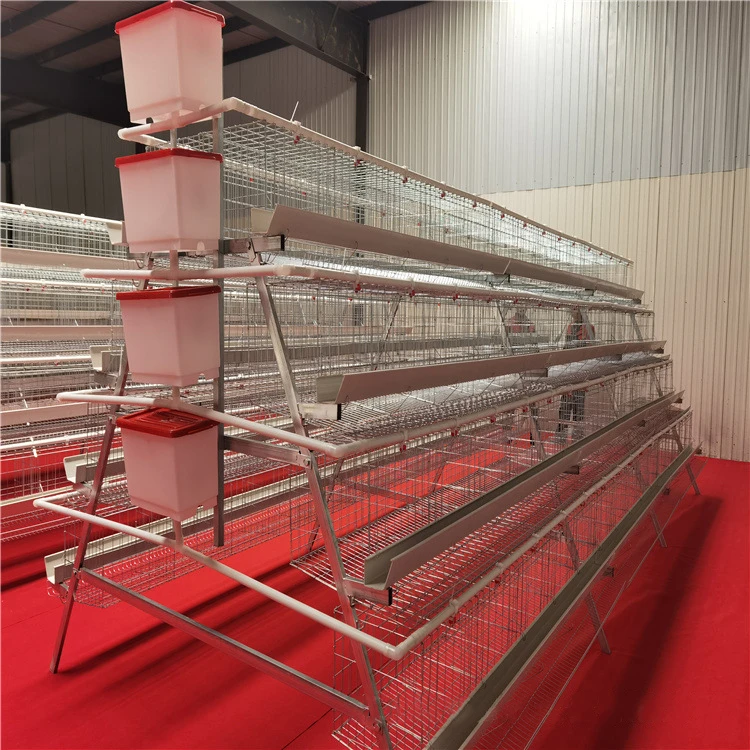
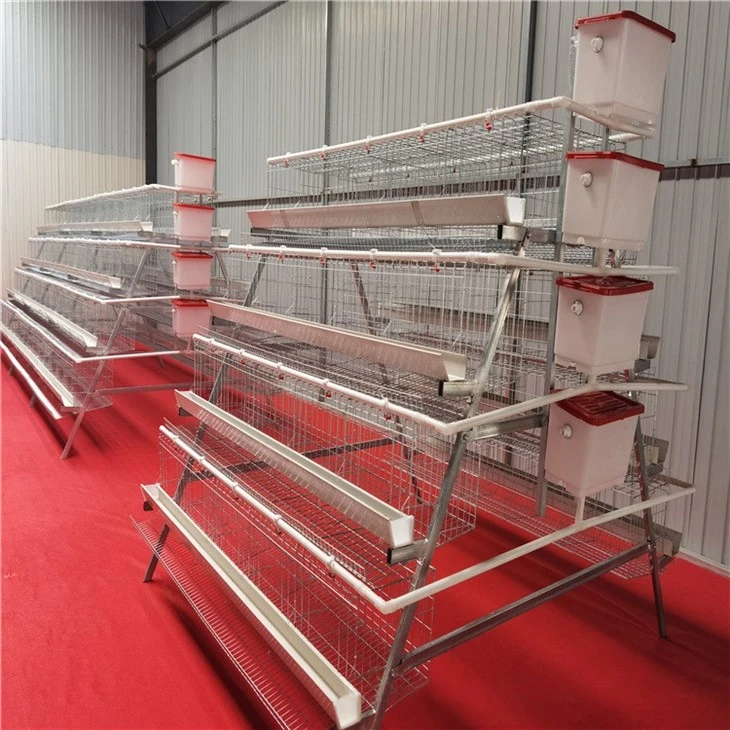

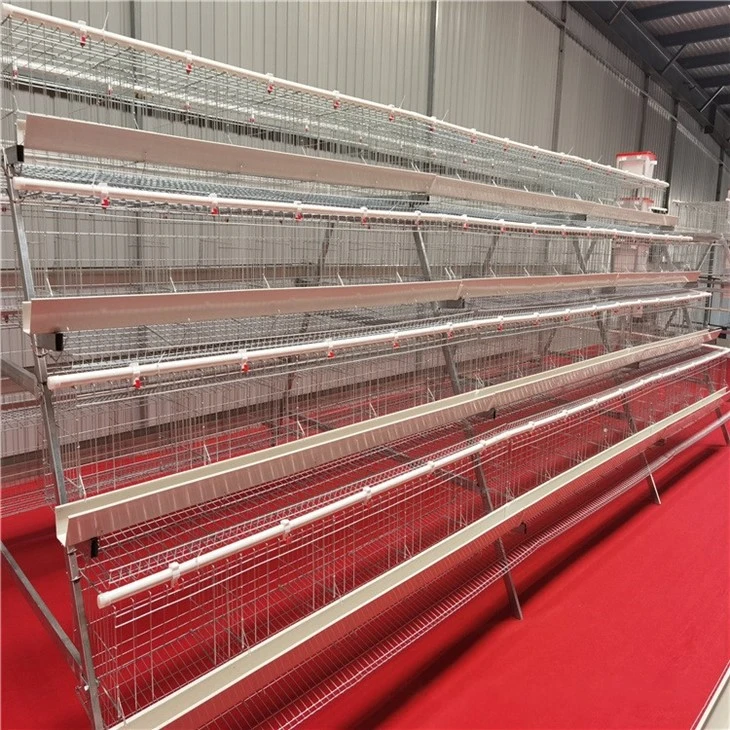
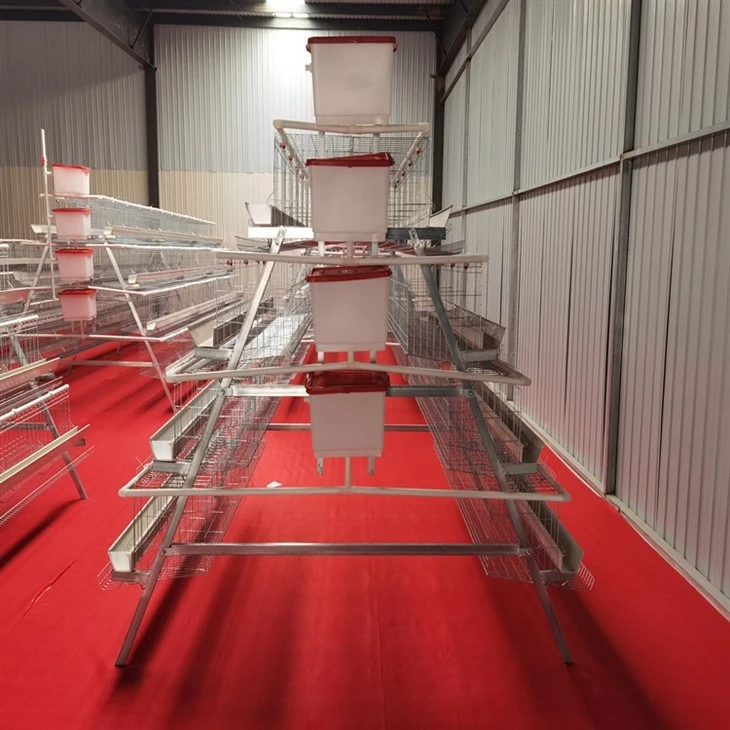
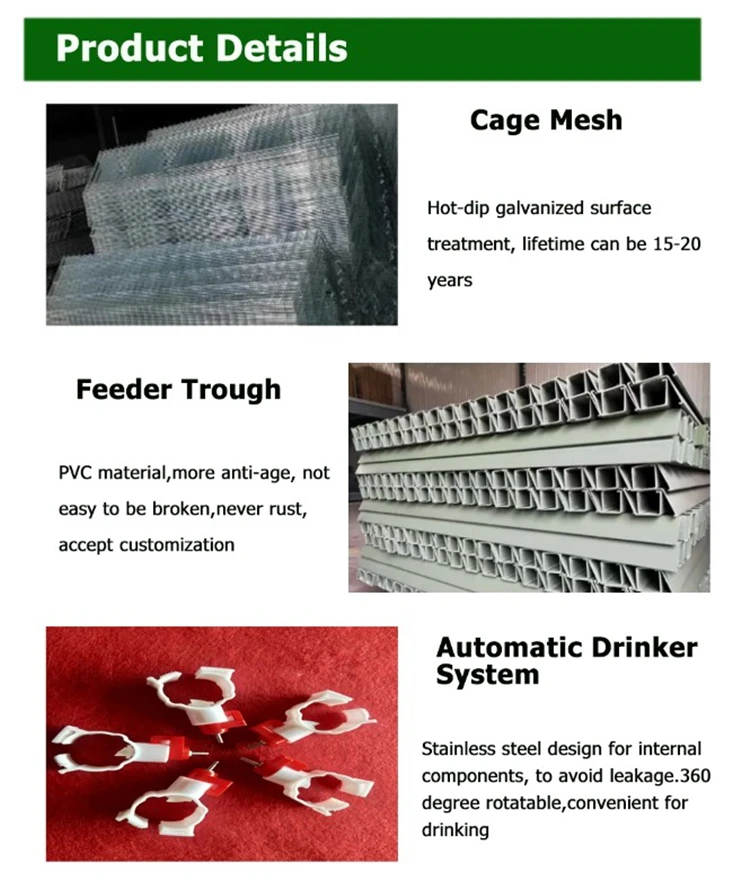
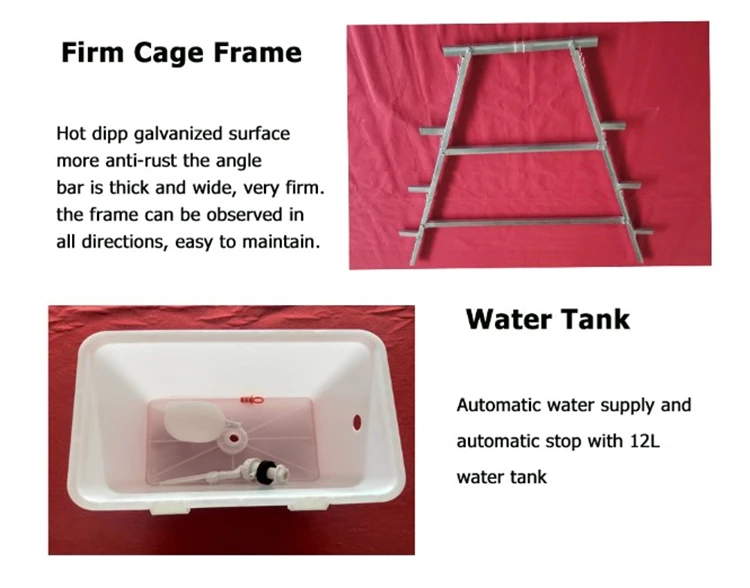
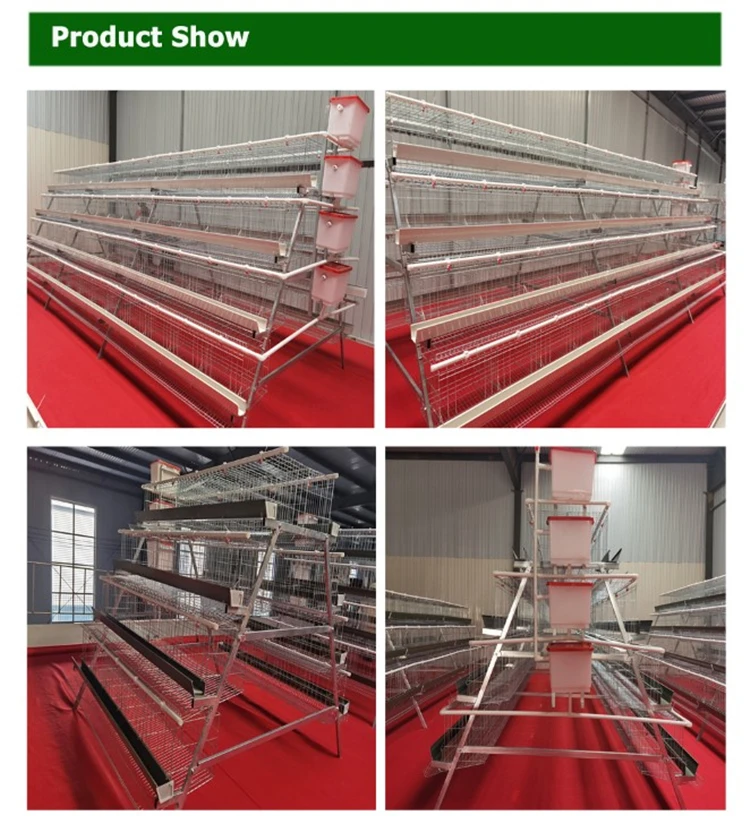
The hot-dip galvanized egg chicken cage is treated with hot-dip galvanizing technology, which has the characteristics of corrosion resistance, long service life, space saving, increased breeding density, reduced chicken movement, and low energy consumption.
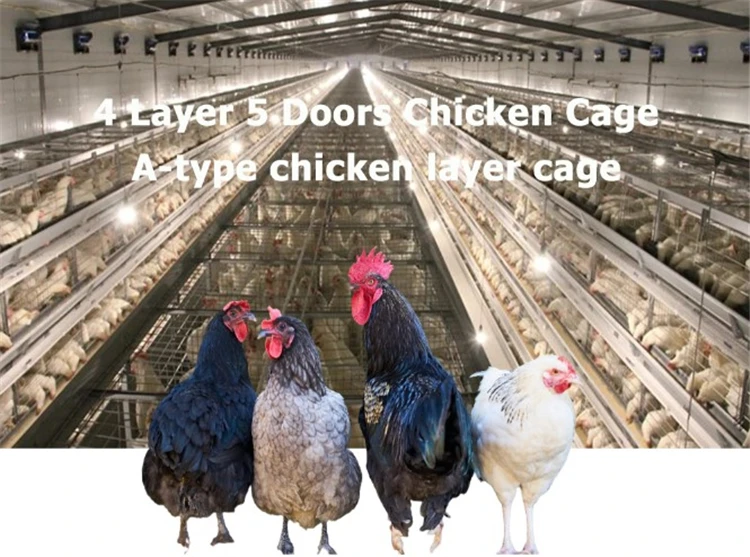
4 Levels 5 Door Chicken Layer Cage
The advantages of hot-dip galvanized 4 Levels 5 Door Chicken Layer Cage are as follows:
First, the advantages of laying hen cages
First, multi-layer cage breeding improves the feeding density compared with ground flat breeding, and the utilization rate of chicken coops is high.
Second, it is convenient for mechanized management, expanding the scale of breeding, increasing output, saving labor, and reducing labor intensity.
The third is to reduce the activity of laying hens, reduce the need for maintenance, and save feed.
Fourth, caged chickens do not come into contact with feces to reduce the spread of parasites, E. coli, salmonella, etc.
Fifth, the chicken house is hygienic and clean, easy to manage;
Sixth, compared with flat breeding, it is easy to observe the chickens.
Seventh, the chicken manure is clean, which improves the utilization rate of chicken manure.
Cage technology for laying hens
1. Buy chicken coops
The full-stepped three-layer layer cage is suitable for farmers, and each cage can hold 3-4 chickens. This kind of three-layer cage, chicken manure can be directly landed, no need to install manure bearing board and manure device, very suitable for large-scale chicken use. Chicken coops are available in the market and can be installed and used after purchase.
2. Basket at the right time
Finishers should be transferred to laying cages from 17-18 weeks of age, so that they have enough time to familiarize themselves with the new environment before the start of production and recover from migratory stress as soon as possible. Before the rearing chickens are basketed, the sick, weak and pecked, prolapsed, lame chickens should be picked out and raised in a single cage or eliminated.
3. Feeding
Caged laying hens are generally fed full price compound feed or concentrate purchased from the market, which is supplied in the form of dry powder, and sufficient vitamins and trace elements must be added to the feed. 1-2 weeks before the start of farrowing, the diet should be changed from the diet of the finishing chickens to the diet of laying hens, and the feeding mode of the diet is ad libitum, which is maintained until the peak of egg production. In order to reduce the waste of feed, each feed should not exceed 1/3 of the depth of the trough In addition, caged laying hens should be regularly fed with grit, every 100 chickens, 250-350 grams of grit per week. The grit must be insoluble sand, preferably granite crushed gravel, and the size should be edible. The amount of grit should be fed within 1 day. If granular shells have been added to the diet, the grit can be left unfed or reduced. Do not feed grit in unlimited quantities, as this will cause stiffness. Caged laying hens should be provided with sufficient clean drinking water.
4. Management
First, ventilation should be good. The density of caged chickens is large, and the body temperature of the chickens is high, around 41 °C, the metabolism is vigorous, at the same time, the higher the temperature of the cage chicken house, the more water vapor exhaled by the chickens, plus the water evaporated by the trough and chicken manure, the relative humidity in the house is also higher. To this end, it is necessary to install good exhaust equipment to ensure that the air in the house is fresh and the appropriate relative humidity is maintained.
The second is to maintain the weight during the laying period. Caged chickens have a low level of activity and tend to increase their weight during egg laying. However, when appetite is low on hot days, try to keep the chickens full and maintain the weight of the laying hens. If the weight of the breed is significantly exceeded, appropriate feeding limits should be implemented during the laying phase. If the body weight is lost, it is indicated that the feeding is not sufficient and the amount of feed should be increased.
The third is to cut off the beak at the right time. Beak amputation is performed on chickens at 6-8 days of age. Beak cutting prevents pecking and saves feed.
Fourth, the temperature should be moderate. The most suitable temperature for laying hens is 8-28°C. It is necessary to do a good job in preventing heat stroke and cooling down and keeping warm from the cold.
Fifth, reasonable light, artificial light should be carried out, so that laying hens have 16 hours of natural light and lighting every day. The time of turning on and off the lights of artificially assisted light should be fixed to keep the light stable, otherwise, it will reduce the yield of chickens. Sixth, maintain good hygiene. Frequent manure, feeding utensils and chicken coops should be regularly disinfected to prevent the occurrence of epidemics.
|
Item |
Specification |
|
Chicken Laying cage |
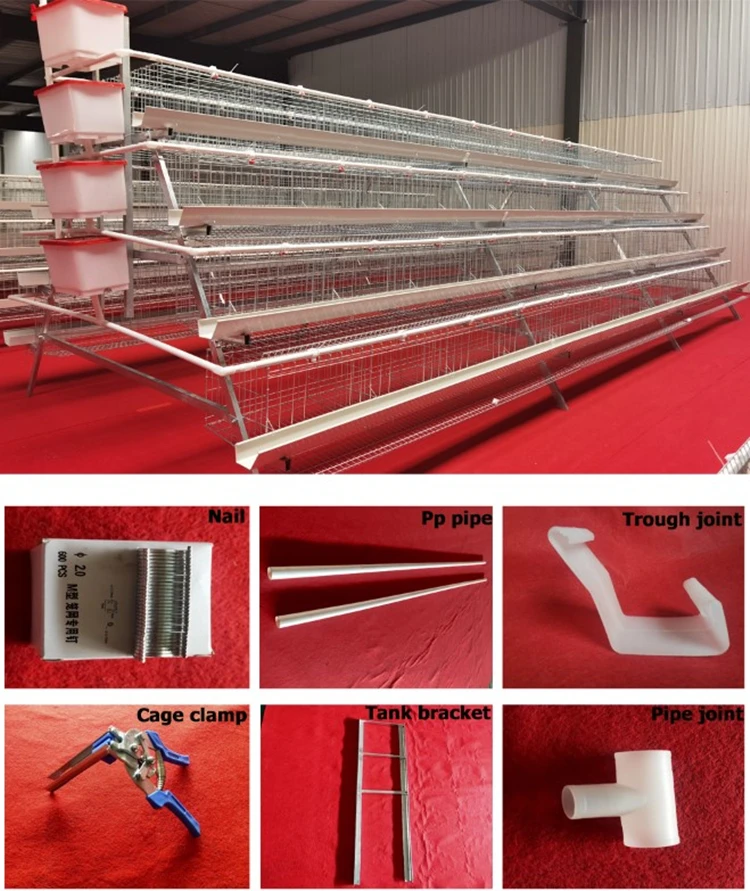
Level: 4 levels 5 door Cages: 8 pieces cages Cage Length: 200CM Every lattice size: 50*45CM Capacity:160chicken Size: 200*220*190cm Weight: 109kg Package Volume: 0.4CBM |
Hot Tags: 4 levels 5 door chicken layer cage, China 4 levels 5 door chicken layer cage manufacturers, suppliers, factory, chicken cage for laying eggs, pellet machine for chicken feed, remote grass cutter, best reptile incubator, chicken breeding cages, turkey plucker machine