


The hen instinctively places the eggs on it to incubate. But sometimes, they may be negligent, resulting in eggs not hatching or hatching malformations. In addition, modern or technology-assisted incubation helps to incubate multiple eggs at the same time using an incubator.


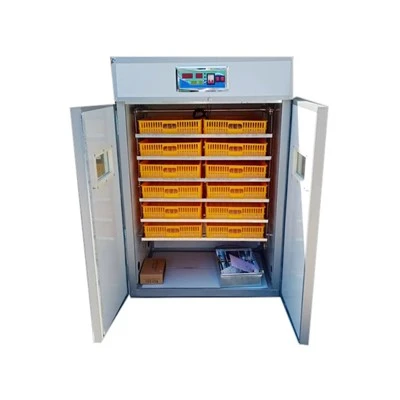
Incubators come in a variety of sizes and designs. However, all incubators have similar features that enable them to successfully perform hatchery functions:
Temperature: Eggs should be kept around 99.5 degrees at all times. A decrease or increase in temperature for several hours can kill chicks.
Humidity system: The incubator must maintain 40 to 50 percent humidity for the first 18 days and 65 to 75 percent for the last few days before incubation.
Climate Control System: The eggshell is porous, allowing oxygen/carbon dioxide to enter and exit. Incubators usually have vents for fresh air to circulate so that embryonic chicks can breathe.
The best incubators are equipped with high-quality thermometers or hygrometers for measuring temperature and humidity. They also have in-home systems that help automatically rotate eggs in a fine-tuned ecosystem, making incubation seamless, safer, and more efficient.
Ideally, the farmer transfers the eggs directly to the incubator and stores them between 50 and 60 degrees and 75% humidity. That is, you can store your eggs for up to 10 days without sacrificing the viability of the embryos. However, when storing them, the eggs are fat-side up so that the embryos can remain viable.
Before transferring the eggs inside the incubator, set the temperature and humidity and adjust them to create the best environment. Maintain an optimal environment until the chicks hatch. You may need to add water from time to time to maintain the necessary humidity levels, especially if you need to increase the humidity on day 18.
Chicks become active in the last few days of hatching and may move noticeably within the shell. Eventually, they peck a small hole at the big end of the egg and take their first breath. Once the chick is out of the egg, let it dry in the warmth of the incubator and then transfer it to the brooder, where it will spend the first few weeks of its life.
However, if you need a modern egg incubator with automation to safely hatch healthy eggs, Be You's egg incubator may be the ideal product for you. Be You's incubator doesn't just help you identify and overcome the perfect incubation atmospheric conditions; It also has features like an automatic egg turner, a transparent lid, and a 24/7 lighting fixture that allows you to monitor your eggs easily.