


1. Preparation before incubation to avoid malfunction during the incubation period. Therefore, before incubation, a comprehensive overhaul should be carried out to check the accuracy of the temperature regulator and thermometer, whether the motor, fan, electric heater, indicator light and alarm device are sensitive, whether the door, four walls and floor of the incubator are tight, and whether the egg trays and hatcher trays are firm. Have your generator ready in case of a power outage.
The eggs from the egg storage are placed in the hatchery room at about 22 degrees Celsius for 4-6 hours, and the eggs are loaded with the big head up for incubation and sterilization.
2. The management of the incubator The modern three-dimensional incubator has a higher degree of mechanization and automation, therefore, the management is relatively simplified, but the incubation volume is large, once an accident occurs, it will cause great economic losses, and the management personnel must do a good job in the following management work:
(1) Temperature adjustment Pay attention to the change of temperature, observe the sensitivity of the regulator, and whether the transformation of the thermometer indicator is coordinated. If the temperature regulation performance is stable, do not twist easily once the temperature is adjusted, unless it deviates from the temperature ± 0.5 degrees Celsius. The temperature is generally recorded every hour.
(2) Humidity adjustment Modern three-dimensional incubator has automatic humidity control equipment, no automatic humidity control incubator, which is equipped with a water tray, every day to add water to the water tray regularly, if the humidity is too large, reduce the water tray, the humidity is insufficient to increase the water tray or adjust the water temperature. The wet bulb gauge water cup should be filled with water frequently, and the cotton rope should be cleaned and replaced regularly to ensure the accuracy of the wet bulb gauge.
(3) Aeration, egg turning and other management of the incubator fan and egg rack should be kept clean and dust-free, so as not to affect the ventilation in the incubator. The three-dimensional incubator can turn the eggs at a fixed angle regularly, generally once every 1-3 hours. When shaking the egg by hand, the operation should be gentle, steady and slow to avoid malfunction. The motor should be refueled regularly, pay attention to whether the operation of the parts is normal, and whether there is abnormal sound. Every day, we should carefully record temperature, humidity and room temperature.
(4) Regularly take care of the eggs, check the embryo development, and the operation of the eggs requires light, fast and accurate action to be careful and steady to prevent shock and damage to the embryos. Observe carefully to avoid missed and mistaken photos.
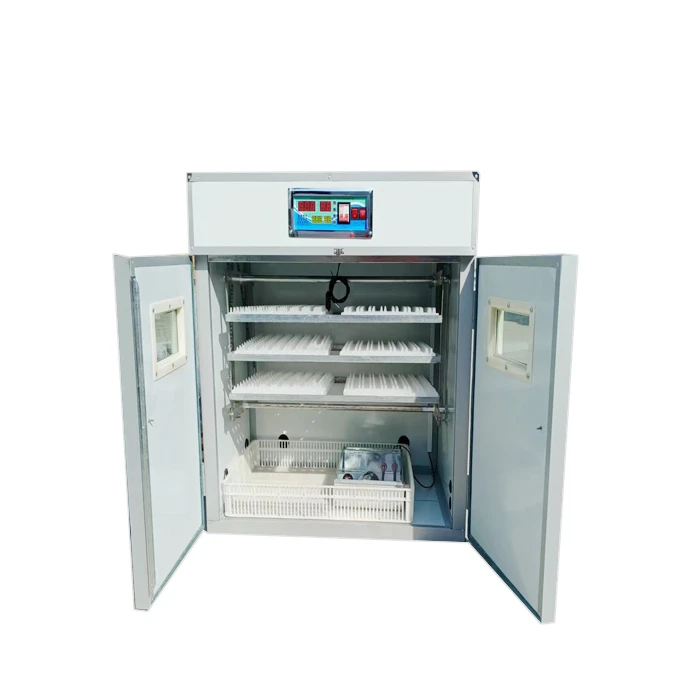
(5) Egg transfer (transfer) The embryo is moved from the hatching tray to the hatcher tray, which is commonly known as egg transfer and transfer (transfer). Embryos are transferred to hatcher trays at the 18th-19th day of incubation. The age of the egg transfer depends on the development of the embryo, and the transfer of the egg can be delayed for 12-24 hours if the embryo is delayed. When the eggs are moved into the hatcher tray, lay them flat and stop turning the eggs.
(6) Hatching Chicken embryos start hatching in 20 days, turn off the lights of the hatcher, so as not to affect the hatching due to chick commotion. When hatching starts 3-4 hours, when the chick feathers have dried, the chicks can be picked and the empty eggshells can be picked out at the same time.
(7) After cleaning and incubation, remove the hatching tray, hatcher tray, water tray, brush off the broken eggshell, dirt and fluff and rinse and dry, and then fumigate and disinfect or disinfect with disinfectant solution for backup.
Insist on the daily maintenance of the incubator in order to maintain the normal hatching of poultry.